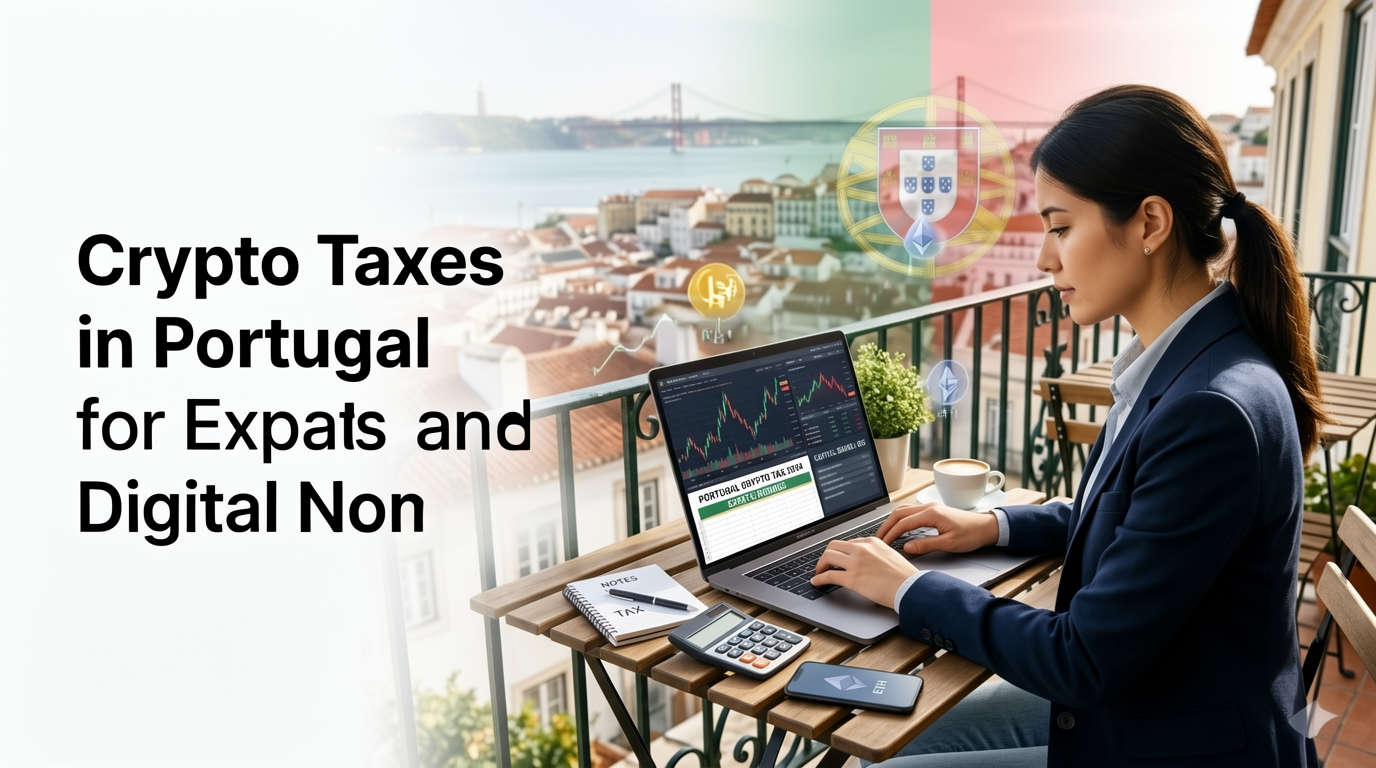
Portugal has become one of the most attractive destinations for crypto investors, especially among expats and digital nomads. For several years, the country built a strong reputation as a tax-friendly place where certain crypto gains were not heavily taxed, which naturally drew attention from people working remotely or investing in digital assets.
This led to a steady influx of international professionals settling in Portugal, and the tax landscape has started to evolve in recent years. Recent changes in crypto taxation rules have introduced clearer guidelines on when crypto gains are taxable, particularly for short-term trading activities. As a result, while Portugal remains an attractive hub for crypto investors, the idea of it being completely “tax-free” is no longer accurate. Newcomers, especially expats and digital nomads, need to stay up to date on the latest crypto tax regulations. If you are a crypto investor in Portugal, then delve into the detailed guide for crypto tax to make an easy journey to future investments.
Is Crypto Taxed in Portugal?
Portugal was once widely known for its crypto-friendly tax environment, where most personal gains from cryptocurrency were not taxed, especially for individual investors who were not considered professional traders.
Before 2023, this created a strong perception that crypto profits in Portugal were largely tax-free, which attracted many expats and digital nomads to the country. However, the tax framework has changed, and since 2023, crypto is no longer fully exempt from taxation in all situations.
The new rules introduced a clearer distinction between different types of crypto activity. In general, short-term trading of cryptocurrencies may now be subject to capital gains tax, especially when assets are held for less than a certain period, while long-term holding can still benefit from more favourable treatment or even exemptions in some cases.
The key factor is no longer just owning crypto, but how and when it is traded. This shift has made it important for investors to understand whether their activity is classified as casual investing or professional trading under Portuguese tax law.
How Crypto is Taxed in Portugal: Updated Rules
Portugal now applies different tax rules, and it depends on how you use and hold your cryptocurrency. The main idea is simple: taxation depends on the holding period and whether your activity is considered personal investing or professional trading.
Being a crypto investor, it is important to understand these categories because each one is treated differently under Portuguese tax law.
Short-term trading: less than 365 days
If you buy and sell cryptocurrency within a period of less than 365 days, your profit is generally considered a short-term capital gain. In this case, the gains are typically taxed at a flat rate of around 28% for individuals.
This applies when crypto trading is done frequently or when assets are held for a short time before being sold for profit. The purpose of this rule is to tax active trading in the same way as other short-term investment gains. In simple terms, if you are actively buying and selling crypto within a year, you should expect your profits to fall under taxable income.
Long-term holding: over 365 days
If you hold your cryptocurrency for more than 365 days before selling, the tax treatment becomes more favourable. In many cases, long-term crypto holdings are exempt from capital gains tax for individual investors, especially when the activity is not considered professional trading.
This rule was introduced to encourage long-term investment behaviour rather than short-term speculation. For expats and digital nomads, this means that simply holding crypto for over a year can significantly reduce or even eliminate tax liability on the gains, depending on the specific circumstances.
Professional crypto trading
If your crypto activity is frequent, organised, and conducted with the intention of generating regular income, it may be classified as professional trading. In this case, your profits are no longer treated as simple capital gains but as business or self-employment income.
This means they are taxed under Portugal’s progressive income tax system, which can result in higher tax rates depending on your total earnings. Professional classification usually applies to traders who operate at a large scale, use advanced trading strategies, or treat crypto trading as a full-time business activity.
Tax Rules for Expats in Portugal
For expats living in Portugal, crypto taxation is closely linked to your tax residency status. In other words, it is not just about where your crypto is stored or traded, but where you are officially considered a tax resident.
Moreover, understanding tax rules starts with determining your residency status, because this directly affects how your income and crypto gains are taxed. In most cases, you are considered a tax resident if you spend 183 days or more in Portugal within 12 months, or if you maintain a permanent home there, which suggests Portugal is your main base.
Once you become a tax resident, Portugal applies a worldwide income taxation system, which means you are required to declare all income you earn globally, including salaries, investments, and any cryptocurrency profits, regardless of where they originate.
This is an important point for digital nomads and crypto investors, as earnings from foreign exchanges or wallets may still fall under Portuguese tax reporting rules.
On the other hand, if you are classified as a non-resident, you are generally only taxed on income that is earned within Portugal, and foreign income is typically outside the Portuguese tax scope.
The key difference between resident and non-resident status is therefore the extent of taxation: residents are taxed on global income, while non-residents are taxed only on Portugal-sourced income.
Digital Nomads and Crypto Tax Implications
Digital nomads living in Portugal often need to understand how their lifestyle affects crypto taxation, especially when combining remote work with digital assets. Many remote workers move to Portugal while earning income from foreign employers or clients, and in such cases, their tax obligations depend on their residency status rather than the source of income alone.
Once they become tax residents, both foreign income and crypto-related income may fall under Portugal’s tax system, meaning they may need to declare earnings from abroad as well as any gains from cryptocurrency activities.
This becomes even more relevant with the rise of Portugal’s Digital Nomad Visa (D8 visa), which allows remote workers to legally reside in the country while working for non-Portuguese companies. While the visa provides a clear legal pathway to live in Portugal, it does not exempt individuals from tax rules, so crypto income and foreign earnings are still assessed under standard residency-based taxation principles.
As a result, digital nomads must carefully separate their employment income from crypto investments and understand how both are treated once they establish tax residency in Portugal.
Reporting Crypto Taxes in Portugal
Reporting crypto taxes in Portugal is an important part of staying compliant, especially for expats and digital nomads who actively invest or trade digital assets.
In most cases, if you are a tax resident, you are expected to declare your crypto-related income when it falls under taxable categories, such as short-term trading gains or professional trading activity. Even if certain long-term holdings may not be taxed, it is still important to understand your reporting obligations because tax authorities may require transparency.
The tax filing process in Portugal is generally done through the annual income tax return, where residents must report different types of income, including any applicable crypto gains, using the official tax forms. Proper records of all crypto transactions include keeping track of wallet addresses, exchange statements, transaction histories, purchase and sale dates, and the value of assets at the time of each trade. A clear record nd reporting helps you clearly demonstrate your investment activity if it is ever reviewed by tax authorities.
Common Mistakes Expats Make
Many expats moving to Portugal make avoidable mistakes when it comes to crypto taxation, often due to outdated information or misunderstanding how the tax system works.
- One of the most common errors is assuming that crypto is still completely tax-free, which was partially true in the past but is no longer accurate under updated regulations.
- Another frequent issue is not properly tracking crypto transactions, especially for assets like Bitcoin, where frequent buying, selling, or swapping can create taxable events that are easy to overlook without proper records.
- Many individuals also ignore residency rules, not realising that once they become tax residents in Portugal, their global income and crypto activity may fall under local taxation rules. This often leads to unexpected reporting obligations later.
- Another major mistake is mixing personal investing with business-level trading, which can result in misclassification of income and potentially higher tax liabilities.
How Innovate360 Can Help
At Innovate360, we help expats, digital nomads, and investors navigate the complexities of crypto taxation in Portugal with clarity and confidence. Our tax consultation services are designed to assess your individual situation, whether you are a casual investor, active trader, or relocating professional, and help you understand your exact tax obligations under current Portuguese rules. We also provide crypto compliance guidance and ensure that your transactions, reporting requirements, and documentation are properly structured to meet local tax standards.
Conclusion
Portugal continues to be an attractive destination for expats, digital nomads, and crypto investors, but its tax landscape is no longer as simple as the “fully tax-free crypto” reputation it once had. Today, taxation depends on several key factors, including your residency status, how long you hold your crypto assets, and whether your activity is considered casual investing or professional trading. It is important to understand these distinctions, especially since becoming a tax resident in Portugal can bring worldwide income reporting obligations. For expats and digital nomads, the key takeaway is that compliance depends on proper planning and accurate reporting rather than assumptions based on outdated information. Being a crypto investor, stay informed about Portugal’s evolving crypto tax regulations to benefit from its lifestyle advantages while avoiding unnecessary tax risks.